

Do you feel inundated by information? Does it come in across devices? Is the news overwhelming? Is it hard to find sources you trust? Does advertising follow you everywhere? Are you having trouble making sense of things, like the rise of some politicians? Do you struggle to stay on top of all the things? Welcome to the modern information environment!
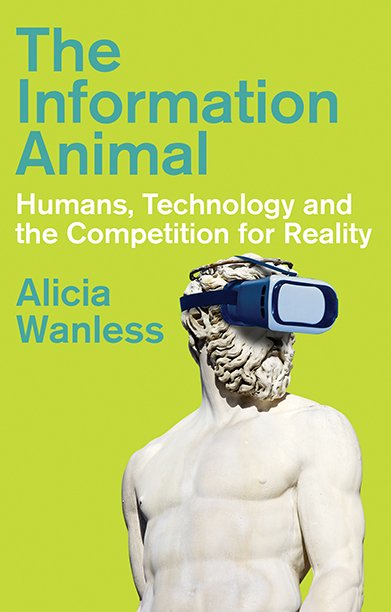
Part of the reason you might be struggling is that the information environment of 2024 is complex. There has never been more people, more technology, or more content than there is today. And every day more is added. Information is produced and shared at ever faster rates, a trend that’s been continuing for the last couple of millennia.
Another reason you might be struggling is that despite all that technology and information, we humans still do not have much of a clue about how the information environment works. But this doesn’t stop some people from making more of a mess of it – whether in the pursuit of power, profit, or proselytising a belief. Chances are your information ecosystem is being polluted right now with low-quality content, some spreading fear or hate. That pollution might even provoke you into taking a side. After all, in this information environment, where attention is the commodity, issues are reduced to stark terms – are you on the side of the morally just or against them? If this sounds familiar, you’re likely experiencing an information competition whereby two or more communities are using all means possible to win hearts and minds – including yours – to adopt their version of reality. This plays out in the news, entertainment, among family, and on your social media feeds.
You might even feel compelled to do something, especially if your worldview feels challenged. It might be as simple as sharing that provocative online post or responding angrily in the comments. You might start investigating claims and sharing examples where you think the other side lied. Maybe you’re a researcher or a journalist who wants to find a cause for the growing strife – why on earth do those people believe these claims? Be careful; here’s where correlation and causation get confused. It can be tempting to tie the problem you’re now noticing to something new – like the latest technology used to process information. It might be, but myriad other factors might also fuel that information competition. But, before running off with calls to control problematic content, I ask you to have a read.
I wrote this book, in part, to help anyone struggling in a cacophonous information ecosystem get better situated by taking a step back to see the forest for the trees. After watching several research-and-response cycles come and go on the problems of the day (disinformation, violent extremism, moral panics) blamed on various technologies (social media, search engines, cable news, video games), I got a sense that maybe our framing of the information environment was wrong. I wondered if we might ever only be looking at a single symptom and a probable cause, and then rushing to a solution without understanding all the possible consequences. After all, humans have done the same in other complex systems like the physical environment – for example, introducing invasive species or pesticides to deal with a pest and causing cascading and harmful unintended consequences. We only started to get a handle on those human-induced challenges recently, around the twentieth century, when scientists began stepping back and studying both physical ecosystems and the broader environment.
My thesis here is that it is time to look at information-related problems differently – in a sense more modestly and in a sense more ambitiously. The modesty arises from a certain caution about what we are in a position to “do” now. The urge to do something about any number of problems associated with the information environment is understandable. But trying to control the flow of information is also putting the cart before the horse – to say nothing about the unintended consequences.
And here’s where the argument becomes ambitious. Before we “do” something, we need to understand what we’re doing, the proverbial waters in which we are swimming. We need to move to study the ecology of the information environment, more generally. We need to build a whole a new field.
This isn’t to say that social media or artificial intelligence aren’t posing problems. Humans are exceptionally good at finding ways to use tools for good and evil, especially as part of an information competition, when the struggle for resources or attention increases. It is more that the efforts to prove their harmful effects, not to mention the interventions to mitigate those harms, seem so futile. In part because isolating cause and effect in a system where so many variables might impact the outcome is exceptionally challenging, yet much of the research is narrowly focused on one potential problem related to an effect that many different things could cause.
Social media and, increasingly, artificial intelligence are part of the information environment. This is the space where information exists. Within it, humans use tools from alphabets to virtual reality to process information into outputs that can be shared, from the spoken word to videos and whatever comes along in the future. In so doing, we form information ecosystems through the inter-relationships between humans, the means for processing information, and the outputs created with those means, which are all shaped by conditions like the economy and education. The information environment is integral to the foundations of democracy, as this is the place where people make decisions. The very legitimacy of democracy is rooted in the ability of people to make free and informed decisions.
The challenge with doing anything in the information environment is that when it comes down to it, the most fundamental information processing happens in our heads. We might be able to see the tools and the outputs, but at some point, how that processed information is all understood comes back to cognition. The very act of intervening in the information environment, even if in the pursuit of ensuring that people can make free and informed decisions, has the potential to take this agency away from them – or, and this is equally as challenging – it can be perceived as doing so. The challenges associated with tackling disinformation highlight this problem.
The information environment did not just come into being with the internet; it has existed as long as humans have communicated with each other. Yes, the information environment is the most complex and globally interconnected it has ever been. Each new technology added changes how information is processed, increasing the volume of outputs and speed at which they travel. But that complexity is all the more reason why we need to study the system as a whole instead of merely its parts, or worse, focusing only on whatever is most feared at the moment. When all we can see is that one big problem, we are missing the reasons why it is a problem in the first place.
Building on this thesis, I explore how fields like earth sciences and ecology emerged to make sense of the planet and ecosystems within it. Over a century or more, the combined knowledge generated from these and related fields helped humanity improve our material conditions and eventually begin to protect the environment. It became painfully apparent that we lack a similar way to bring the various disciplines and methods of studying aspects of the information environment together to make sense of this complex system. In other words, we need a field to explain how the information environment works. And without that, proving cause and effect will be damned-well impossible on all but the simplest of problems. This book argues why we need information ecology to fill this gap, and Chapter 1 explores how we get there by learning from physical ecology and earth sciences, while the next two chapters set theoretical foundations for reading the book.
Humans are information animals: we need information to make sense of the world. Yet the concept of information is very poorly understood. That might be one of the reasons we fixate on a problem like disinformation or a specific technology at the expense of seeing the information environment. Information is often conflated with content, but it’s so much more than that. It drives us as information animals and is as much a part of our DNA as it is in the things we create to communicate with each other. Chapter 2 explores the different theories and interpretations of ‘information’ across existing disciplines and puts forward a concept of information that facilitates greater consilience to support a more holistic understanding of the information environment.
Technology doesn’t exist in a void. Humans create and use it to process and share information for myriad reasons. The interactions between humans, the means for processing information, and the outputs produced as a result create dynamic information ecosystems. The first step is to recognise they exist as a concept that can be studied. By studying information ecosystems, in turn, we might better understand why some struggle with disinformation, for example, and others do not. Chapter 3 delves into the information environment and ecosystems within it, explaining why it is necessary to understand technology in tandem with humans and the outputs generated by using it, and outlining what that might consist of, thus providing a framework for the historic case studies.
A good theory endures throughout time. That is another shortcoming in the current focus on today’s challenges: an approach fixating on a specific technology used now might not apply in the future. And so, I turned to history to explore information ecosystems in different societies, starting with Ancient Greece, looking for possible trends that may offer useful lessons to us today. Hypothesising that our focus on technology leads us to miss the wider system, I chose case studies from media epochs, which scholars identified and described, usually associating them with significant technological shifts. These broad periods consisted of Orality, Print, Electricity, and Digital. Given the significance of the Industrial Revolution, I sought examples before and after steam power’s introduction for the Print epoch, bringing the cases up to five. As the information environment becomes complex over time, so too did each case study as the present drew nearer, having more material to draw from. This also means that these case studies can be detail-heavy at times, but those details are also necessary to explain those complex information ecosystems; I promise it all comes together in the end. As a student of war studies, I was especially drawn to cases that involved a known conflict, like a civil war or a regional conflict. My assumption was that studying these ecosystems over several decades that preceded each respective conflict may shed light not only on the evolving interactions, but also on societal attitudes and responses, as these communities were unknowingly nearing breaking point. Inspired by pioneering ecologists like Alexander von Humboldt and Charles Darwin, I set out to document aspects of those information ecosystems – the people, the tools or means of communication, and the outputs – to identify what might be studied over time using both historical works and primary sources where possible. The metaphors used draw from their ideas as well as the broader field of ecology. While this work takes from historical examples, it is not a history book in itself. It is a journey into information ecosystems of various historic periods, in homage to those early ecologists who helped people to see and understand the world around them. And, while this included considering the latest technology of the time, I also tried to expand the aperture and take an inductive approach, remaining open to what might be found instead of looking for only what I expected.
In those explorations across ages, a pattern emerged. In all the information ecosystems where two communities competed to impose their version of reality on the whole, a consistent combination of factors and conditions were observed. Yes, a new technology was introduced for processing information, but it often came along with several other related changes to how information could be processed and shared, leading to increased outputs and speed of distribution. At least one community, sometimes both, also experienced a recent increase in the number of people who could meaningfully engage with information through increased access or capacity. A new idea also emerged that challenged an existing idea, and various actors propagated it using available means and outputs, usually causing a similar reaction from those with opposing views, thus sparking an information competition. In so doing, by-products of the competition included information floods and pollution, disturbances which resemble phenomena from the physical environment. Finally, at least one side would attempt to control the flow of information, but usually with little success if measured in a favourable outcome to the conflict.
Information floods occur when there is a marked increase in a particular format of informational output conveying a repeated narrative. This increase in output can be caused deliberately, as in an entity or community intentionally flooding an information ecosystem with a repeated narrative by creating and distributing large amounts of content. Floods can also occur because of a change in the capacity to produce information, thus causing a growth in available information overall, including of a particular format. In the context of an information flood, a unit of information is defined by a particular narrative representing an idea that is being repeated at an increasingly faster rate and volume in a short period of time, such that it dominates the information ecosystem in which this occurs, drowning out other types of information. Information floods tend to follow a very rapid change in how information is processed and delivered within a given information ecosystem. A rise in the volume of content about a specific topic gives the issue prevalence, and if that idea is oppositional to another point of view held by others within that information ecosystem, it can exacerbate growing tensions between two communities. Depending on how the two sides react, flooding the information ecosystem can escalate an information competition into a conflict, as opponents attempt to gain an advantage over the other by either promoting their message or drowning the opposition. Flooding an information ecosystem with messaging on a particular topic can also create the illusion that the belief conveyed is more widely held than it might be.
Often occurring alongside information floods is information pollution, or the presence of low-quality information. Information pollution includes an array of types, ranging in scale in their degree of degradation to the information environment. On the lower end of the spectrum are irrelevant or unsolicited messages such as spam email and redundant or empty information that contributes little to knowledge, such as many forms of entertainment. At the other end of the scale are rumours, outright lies, abuse, or content spreading fear or anger to agitate a population.[1] Whereas higher quality information, to borrow from data science, would be accurate, complete, timely, unique, and coherent.[2] Of course, given that information pollution is inherently an output, classifying it comes with the usual subjective challenges discussed further in Chapter 2. That said, information pollution was one of several factors and conditions present in each case study that formed the pattern outlined above.
In Ancient Greece, before the Peloponnesian War in 431 BCE, a form of writing was the major innovation for recording and communicating information. While writing had been around for a few centuries, Socrates still worried about how it would kill the spoken word, and his student Plato thought the outputs from it, like plays, would misinform the people. But messaging from a different type of output, in building projects, was causing a stir. A new radical idea of democracy had taken hold, and Athens was enabling more and more men to participate in public decision-making, such as when to go to war. At the same time, advances in the boat construction and roads to support this democratic court system helped move information faster across the city-state and beyond, opening Athens up to the world. With a growing wealth, Athens promoted its democracy in a massive building programme aimed at demonstrating its standing in the Hellenic world after fending off the Persians – all to the dismay of Sparta, whose own information ecosystem was tightly closed and determined not to change. This sparked a rather one-sided information competition between the two Greek states, explored in depth in Chapter 4.
The information ecosystem of seventeenth-century England experienced several shifts before the outbreak of the Civil War in 1642. Sure, the printing press had existed for two centuries, but its uptake in England was heavily controlled and slow. That didn’t stop people like Robert Burton from complaining in his famous 1621 medical tract, The Anatomy of Melancholy: “As already, we shall have a vast chaos and confusion of books, we are oppressed with them, our eyes ache with reading, our fingers with turning.”[3] Print depended on an earlier innovation, paper, which was also slow to develop domestically in England. It was yet another technology people complained about because of the volume of letters its use amassed, not to mention their untrustworthiness as the reader couldn’t see or hear the people sending them.[4] Letter writing created networks across Europe, spreading enlightenment and religious ideas alike, and canals and a new postal system were moving letters and the first newspapers in the form of courantos across England faster and cheaper than before. While King Charles worried about controlling the growing printing press and nasty rumours about his Papal ties, a new class of merchants was enriched through colonialism, emerging from a general population that had only just returned to pre-Black Death numbers. Protestantism opened public education, enabling more and more people to read, including tradespeople, who could sign their names in the growing practice of petitioning the sovereign. From these ranks came the Godly, a group of radical protestants demanding more religious reforms and changes to the governance structure with more authority in the Parliament. They were inspired by Scottish radicals, whose own information ecosystem was tied to England’s with the ascension of Charles’ father to the English throne. No amount of control over the production of information in England could stop its inflow from Scotland and Europe, fuelling the information competition explored in Chapter 5.
Two hundred years later, on a different continent, uneven changes rocked the American information ecosystem before the Civil War started in 1861. Steam technology moved information faster across oceans and along new canal and train systems, though primarily in the North. With trains came the telegraph, acclaimed by its inventor as society’s nervous system, collapsing space and time, and later decried for its “vast injury. Superficial, sudden, unsifted, too fast for the truth, must be all telegraphic intelligence.”[5] The telegraph enabled the creation of the Associated Press. Still, it was innovations in print that decreased the price of newspapers and advances in the postal service that made it cheaper to distribute, spurring a growing news media sector. Literacy rates in the North were high by European standards, far outstripping those in the South. With widespread education, new ideas came, including abolition. Its advocates took to earlier technology in books, using fiction as one way to rally support. Abolitionists also conducted widespread petitioning of Congress, much as the Godlyhad done in England. In reaction, proponents of slavery tried to control the spread of abolitionism, supporting a ban on those petitions and censoring mail about it in the South. Ultimately, they responded in kind, with their own newspapers and books pushing their side, contributing to an information flood and pollution while at it. The two sides locked into an information competition that increasingly led to violence, as explored in Chapter 6.
Chapter 7 moves into the Electric Age and the Vietnamese information ecosystem in the early twentieth century. Here again, several shifts changed how information was processed and spread. Yes, radio played a role in the fight for independence from France following Hồ Chí Minh’s declaration of Vietnamese independence in 1945, itself broadcast with a makeshift system. However, its earlier use was heavily controlled by French occupiers, whose colonisation inadvertently connected the Vietnamese to a wider world of new political ideas through colonial education, exiling political activists, and advances in international travel to connect the colony with France. Ultimately, colonisation interconnected the Vietnamese and French information ecosystems, leading to disappointment in one when expectations raised in the other were not met following the First World War. The widespread educational adoption of a simplified script called quôc nhu sparked a rise in literacy levels, and growth in the printing sector helped a generation of nationalists formulate and spread new ideas about Vietnamese independence. Unsurprisingly, the French reached for control of the information ecosystem, made all the more difficult by the Second World War, Japanese occupation, and what seemed to be a lack of understanding about the Vietnamese. The conflation of one information competition, around Vietnamese independence, with that of another, the Cold War, interconnected a further information ecosystem in America to this conflict.
The last case study in Chapter 8 explores the Ukrainian information ecosystem before the first Russian invasion in 2014. While Russia saw the mass protests in Kyiv’s Maidan Square as just another Western-backed revolution fuelled by social media, the Ukrainian information ecosystem had experienced many other shifts beyond the introduction of the new technology. This included wildly shifting levels of control over the information ecosystem, beginning with its opening to a wider information environment after the dissolution of the Soviet Union. As a new class of ultra-rich oligarchs benefited from privatisation, they captured media outlets to advance their interest and support politicians, who promised a highly educated public a lot, but seldom delivered. The quality of journalism plummeted, particularly as internet-enabled media grew, and with an astronomical rise in the advertising sector came increased paid-for content dressed up as news, locally known as jeansa. In this highly polluted and contested information ecosystem, a competition developed around the country’s political future – would it try something new and join the European Union, or stick with historic alliances in Russia? At least on the surface, that’s how it seemed, but mass protests had also become the one form of communication ordinary people could resort to with a corrupt elite. And so, while there was an information competition between East and West at one level, there was also just a desire for something better. Tools like social media and cell phones were used to help organise the expression of that desire, but its roots went far deeper in that information ecosystem.
This book is the story of the information animal and how it competes as part of a social group for supremacy of its ideas within its information ecosystem. As such, this is also an exploration of information ecosystems and how changing environmental conditions enable the creation, spread, and consumption of information in all its forms and, ultimately, new ideas that are the basis for information competition, as well as information disturbances that are aggravated by such competition. In other words, this is the story of a system and how humans relate to it, drawing on insights from conflicts spanning more than 2,000 years of human history.
Multiple shifts occurred across each of these information ecosystems before conflict erupted. This included changes to factors related to the people, their means, and outputs, as well as surrounding conditions. While in each case this included the introduction of a new technology, often the role it played wasn’t enough for someone to declare that new tool the main or sole cause of the information competition. As we shall see throughout those explorations, various actors within each information ecosystem used many means to create a variety of outputs to achieve their own aims. These outputs, though, were an expression of ideas that were shaped by conditions, such as education, economy, and quality of life, within those information ecosystems. The relationships between these factors and conditions create a climate for information competitions, and in particular, ones that risk turning into conflict.
In all of these cases, new technology changed how information could be processed and shared, but it didn’t replace what came before. Instead, it added a new level of complexity. In that way, our current information environment is directly tied to what came before. This trajectory will continue unless something significant happens that cuts us off from the past and all the information sources maintained around it. Each generation experiencing a new technology will feel that the pace of change they experience is unprecedented, but it’s a sensation many have felt before when new technology was introduced to their information ecosystem. Some comfort might come from recognising this. We should expect to experience fear of new technology; that’s normal, but we should also expect that this fear will lead to a desire to react. That fear will also present a convenient excuse to blame new technology for whatever problems society is currently experiencing. While there is a chance the new tools are aggravating existing issues, it’s more likely the situation is far more complex than meets the eye. In a highly interconnected world, where information is produced at ever faster speeds, it will become even more critical that we are able to step back and see the bigger picture, lest we jump to intervene in ways that make the situation worse.
Information ecosystems are different. What might work to build resilience in one might backfire in another. Currently, we have little way of knowing what works and what does not because we aren’t looking at the system. In the pursuit of doing something, we are jumping to conclusions that might be faulty. I can’t tell you how many times I’ve heard Finland hailed as a master case in addressing disinformation. Nary a conference panel fails to praise the Finnish media literacy success story. Yet the factors and conditions present in the Finnish information ecosystem are very different from those in Canada or the United States, which Chapter 9 explores in more detail along with why understanding these differences matters.
This book is a call to look beyond latest threat or technology to see the information environment as a system, and in so doing find proactive, evidence-informed approaches to address problems rather than reacting in fear to a great unknown. Yes, disinformation and artificial intelligence are scary. However, jumping to a response out of fear won’t get us any further in understanding how a phenomenon might change the information environment. Those answers will always elude us if we never figure out what state the information environment was in before a new threat was identified, or a novel technology was introduced. We will face this exact situation regardless of what new technology comes along in the future, as explored in Chapter 10, unless we approach the problem differently. This is why we need a new field; this is why we need information ecology.
[1] Jonah Berger, Contagious: Why Things Catch On (Simon & Schuster, 2016).
[2] Behrouz Ehsani-Moghaddam, Ken Martin, and John A Queenan, “Data Quality in Healthcare: A Report of Practical Experience with the Canadian Primary Care Sentinel Surveillance Network Data,” Health Information Management 50, no. 1/2 (2021): 88–92, https://doi.org/10.1177/1833358319887743.
[3] See: Robert Burton, The Anatomy of Melancholy (The Gutenberg Project, 1621), https://www.gutenberg.org/ebooks/10800.
[4] Paul Dover, The Information Revolution in Early Modern Europe, vol. 62 (Cambridge University Press, 2021).
[5] William F Channing, “Lecture III: The American Fire-Alarm Telegraph,” in Annual Report of the Board of Regents by the Smithsonian Institution (A. O. P. Nicholson, 1855), 148; “Latest By Telegraph: Our Washington Correspondence. The Ocean Telegraph – Relative Benefits and Evils – The President and His Companion – Bigler and Stanton, Etc.,” The New York Times, 19 August 1858, https://timesmachine.nytimes.com/timesmachine/1858/08/19/78859815.html?pageNumber=4.
